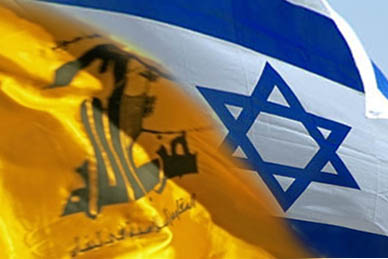
 Is the latest Israel-Lebanon war of words aggravated by the media?
Experts are calling the press treatment ‘irresponsible’
Israeli Prime Minister Benjamin Netanyahu performed a bizarre u-turn on Tuesday in the country’s on-going war of words with Lebanon. “There are no winds of war with Lebanon,” Netanyahu said on Israeli television during a visit to the Hatzerim Air Force Base, east of Beersheba. “This is a media storm that has nothing to do with anything concrete.”
“We do not see anything special up there,” he added, in reference to the areas surrounding the Blue Line – the boundary of Israeli military from Lebanon – which has seen a spate of tension-heightening incidents in recent weeks.
Netanhayu has been but one voice in a cacophony of threats, coming out of both countries since the explosions at the Khirbet Silim arms cache on July 14.
His comments came a day after warning that Israel would hold all of Lebanon responsible for any Hizbullah aggression, should the Shiite group be formally accepted into the country’s cabinet. Last week, Israeli Defense Minister Ehud Barak vowed to respond to any Hizbullah attack with “all necessary force.”
Hizbullah, for its part, has promised to greet any Israeli aggression with greater strength and violence than that of the 2006 July war.
Hizbullah’s leader, Sayyed Hassan Nasrallah, is set to outline the group’s military response capabilities on Friday.
President Michel Sleiman has called the Blue-Line rhetoric a demonstration of Israel’s “tendentious intentions toward Lebanon.” But has the Arab and international media reported the threat of a conflict fairly, or have some dispatches sought to sensationalize the real potential of another summer war?
Sharif Hikmat Nashashibi, chairman of UK-based Arab Media Watch (AMW), told The Daily Star that the Israel premier’s latest backtrack should not cloud his recent penchant for talking tough.
“It’s difficult [to know] what to make of it. I would tend to believe his aggressive rhetoric rather than his conciliatory rhetoric,” he said.
“He’s always been rather harsh, so [his latest comments are] strange. It’s not been covered much in the [Western] press,” he added.
Muna Nashashibi, AMW’s Campaign Coordinator, said of Netanyahu: “He says one thing and does another; we haven’t been very encouraged by what he has said.”
The Times of London recently featured a story, quoting “defense officials” who alleged Hizbullah’s arsenal currently comprises 40,000 rockets.
Nashashibi labeled the report “somewhat irresponsible.”
“Before you read the article, you know that all resources came from the Israeli side,” he said and added that “[Netanyahu] can’t talk about the media blowing things out of proportion because [the figures] come from the Israeli side.”
He called upon the Arab media to seek to corroborate one-sided reports, by using reporters to verify facts on the ground, something that Western media organizations rarely seek to do.
“When the reports of weapons appear, it would be important for the Arab media to fill the gap, in terms of the other side, to confirm whether or not these claims are true.
“Too often these claims go unverified and people think it’s the truth because it’s not answered,” he said.
Nashashibi used the example of Israeli media reports during 2006 which claimed that Hizbullah was using civilians as human shields. He said that not one journalist that AMW spoke with had any evidence.
“We talked to reporters on the ground and all of them refuted these claims.”
Sahar Atrache, a Beirut-based analyst with International Crisis Group said that such reporting on the Arab-Israeli conflict was nothing new.
“Since the July war we have been witnessing these kinds of media campaigns between Israel and Hizbullah,” she said.
“This is part of the game, each party is trying to prove its military and political strength and the media is part of the process.”
Nashashibi was critical with the way the ongoing crisis had been reported in Western media. “Most Western journalists cover the Arab-Israeli conflict [in a way that] gives the Israelis an immediate advantage and a level of control over their propaganda,” he said.
However, Arab media is far from impartial in its coverage, according to Atrache.
“The Arab media has learned before now how to react to Israeli statements,” she said.
“My problem with this kind of coverage is that it doesn’t show you the full picture. Sometimes the information serves to paint a picture rather than provide the facts.”
Muna Nashashibi didn’t believe, however, that the Arab media’s partisan nature necessary led to biased reporting.
“Of course their opinions are different. It’s not a question of being biased, they are just building on comments and the experience that we have had so far as Israel [is concerned],” she said.
“They are not encouraging people to take sides and people already know what is going on.”
Nashashibi said that, regardless of how the threats were portrayed in the media, the sentiment behind their issuance pointed to instability.