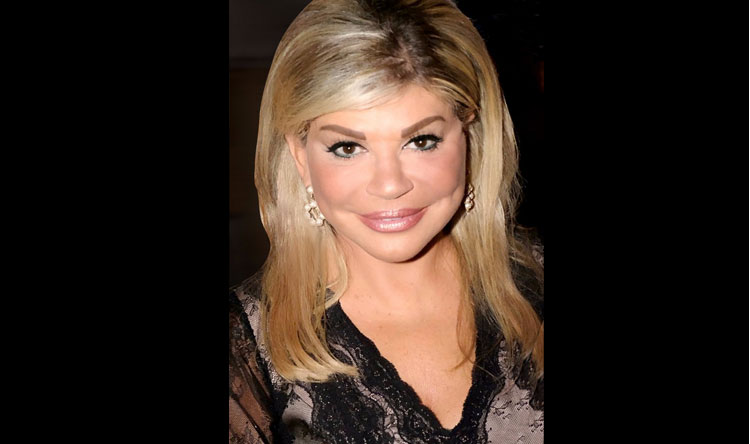
On Feb. 5 of this year, something historic took place. For the first time in Lebanese history, a woman minister handed power to another woman. May Chidiac, a former broadcaster who became an icon of press freedom and anti-Syrian resistance when assassins attempted to take her life in 2005, took the reins of the office of the Minister of State for Administrative Development from Inaya Ezzeddine, an MP for Tyre.
Both women are highly accomplished, and both hold doctorates.
“Women take things much more seriously than men,” quips Chidiac from her Downtown office. “It’s genetic, believe me.”
It’s 4 p.m. on a Thursday, and Chidiac has squeezed in an interview between marathon budget sessions in Parliament.
“I’m a workaholic … My staff always tells me, ‘Dr., please slow down, we are tired,’” she says. “But they have to deal with it.”
Since becoming minister, Chidiac has been working on a slew of initiatives from her tiny office – one of the smallest in Cabinet – in an attempt to remake the face of the Lebanese bureaucracy.
She is building on much of her predecessor’s work, including a major digitization drive and an anti-corruption campaign. Both were flagship projects for Ezzeddine.
“We’re currently finalizing the Digital Transformation Strategy and the action plan,” Chidiac says.
But she isn’t waiting for plans to get started. OMSAR, as her office is known, has begun automation and archiving at the Economy Ministry and the Court of Cassation, Lebanon’s highest court for civil and criminal matters.
“We’ve established two data centers at the Justice Ministry and the Jdeideh courts,” she says – a major leap forward for Lebanon’s notoriously outmoded judiciary. “And very soon, we’ll start working on automating and simplifying procedures at four National Social Security Fund centers in different regions” – another administration well-known for red tape and an ink-and-paper workflow.
Looking to clamp down on corruption, Chidiac is finalizing OMSAR’s strategy and plans to submit it to Cabinet “very soon.” She is also working to provide technical assistance to alleviate Lebanon’s solid waste crisis.
Chidiac says OMSAR’s overarching goal is to “restructure the public administration … and reduce the size of the Lebanese bureaucracy.” To this end, her office has already “started to set job descriptions in the Industry and Economy ministries” with a view to assist restructuring in both, and is looking to write an overall strategy to reorganize the state bureaucracy.
The minister says her initiatives will not be greatly affected by the 2019 state budget that passed Parliament Friday. “I cannot have less money than I have now,” she quips.
OMSAR was allocated just under $24 million in the draft budget passed by Cabinet. The final figure was not yet available as The Daily Star went to print. Chidiac’s Lebanese Forces were opposed to the budget, saying it didn’t go far enough to reform state finances.
“What we want as the Lebanese Forces is to solve the problem at its root, not to slap on some makeup and say, ‘OK, we reduced the deficit,’ but through solutions that will not last into the future,” she says.
Chidiac says the four LF ministers had made several proposals when the budget was before Cabinet, “but many of them were not taken into consideration, or some were changed when the budget was discussed in the parliamentary committee.”
Cabinet had met nearly daily in the run-up to endorsing the budget in late May, but that spirit of collaboration collapsed on June 30 when clashes killed two people traveling with Minister of State for Refugee Affairs Saleh Gharib in the Aley town of Qabr Shmoun.
Gharib, who represents the Lebanese Democratic Party in Cabinet, had been assisting Foreign Minister Gebran Bassil, who had planned to tour the area. The tour was seen as a challenge to Walid Joumblatt, the de facto head of the Druze community and leader of the Progressive Socialist Party, the LDP’s much larger rival.
Bassil, Gharib and LDP leader MP Talal Arslan were furious, considering it an assassination attempt. They have called for the matter to be referred to the Judicial Council, a specialized court that deals with highly sensitive cases, but other parties, including the LF, have refused.
On July 2, 11 ministers allied with Bassil’s Free Patriotic Movement, including Gharib and Minister of State for Foreign Trade Hasan Mrad, failed to show up to a Cabinet meeting. Not wanting to escalate the situation, Prime Minister Saad Hariri called the meeting off. Cabinet hasn’t met since.
“I personally don’t believe it was an intentional assassination attempt,” says Chidiac, whose LF is allied with the PSP.
“They want to put Joumblatt in a corner … They want to prove that they have become so important that they can keep the country from having a [functioning] government,” she says.
“OK, they can do so. But how will it end? This will lead nowhere.”
Chidiac sees more sinister forces at work. Noting that Hezbollah initially attended the July 2 Cabinet meeting before throwing its support behind the FPM and LDP, she says, “I don’t think there was this agreement for them to boycott the session [beforehand]. But with time, things are getting poisoned more and more.”
Behind the LDP and Hezbollah, she says, “you have the Syrians.”
The issue of Syrian influence in Lebanon is highly personal for Chidiac. On Sept. 25, 2005, a car bomb blew off the journalist’s left leg, setting her on fire and riddling her with shrapnel. She was rushed to the hospital, where her left arm had to be amputated.
The attack was seen as retribution for her outspoken criticism of Damascus’ influence in Lebanon.
Chidiac says Syria is now trying to reassert itself in Lebanon, 14 years after its withdrawal. “They are trying to force a comeback,” she says. “Unfortunately, they have some allies here who have been forced even on Hezbollah and who were elected as MPs.”
But “there is a big resistance to it, because we see how things are,” she says. “We paid a really big price to get rid of the Syrian occupation.”
Chidiac says her problem is with the Syrian regime: “We have nothing against the Syrian people.”
But she still warns that the influx of Syrian refugees has presented challenges for Lebanon. And one of those challenges strikes at the heart of her belief in human rights: the question of Lebanese women passing on their nationality to their children.
“Whether we like it or not, there are two issues here. You have the woman’s right … to give nationality to their children, whoever they decide to marry, because it’s their own freedom of decision and liberty,” she says.
“But at the same time, there is a demographic factor that plays in.
“We have 1.5 million Syrians in Lebanon, so if you make [passing nationality] open to every woman, it will cause a big problem for Lebanese demography.”
Most Syrians are Muslim, and Chidiac sees unbridled freedom for women to pass nationality on to their children as an unnatural threat to the place of Christians in Lebanon. “Maybe with time, Christians could become the minority, but you have to leave it to the natural course of events.”
“It’s not fair … but you have to make an exception [in passing on nationality] for those marrying Syrians and Palestinians,” she says.
Despite that compromise, Chidiac sees herself as a defender of women’s rights and their place in the public sphere.
She personally supports a quota for electing women to office, although the LF does not. “You have to get people’s mentality used to voting for women,” she says.
But she stops short of full equality: “I’m for 30 percent.”
Why not 50 percent? It may be too far a reach. “The fact that you’re imposing a quota [may in itself be seen] like you’re taking an opportunity from others,” she says. “I believe you need to change the mentality, but at the same time, you have to respect the voters’ will.”
Her view of the quota is not a rigid, permanent reform, but “to train, if you will, the Lebanese mentality that … women can be leaders and succeed much more than men if they want to.”
“They used to say, ‘we don’t have qualified women, so this is why we don’t have women in the government,’” she says. “But we all know this isn’t true.”
Now things are changing. “We are one of the few parties to have a woman MP,” Sethrida Geagea, Chidiac says. “OK, that’s not enough, we should have more – but we made a point to have women on all the electoral lists, either with us or with our allies.”
A record six women were elected to Parliament in 2018. And now there are four women ministers, also a record.
A small start, perhaps, but as Chidiac says, sitting in her minister’s chair, “Here I am, a woman.”