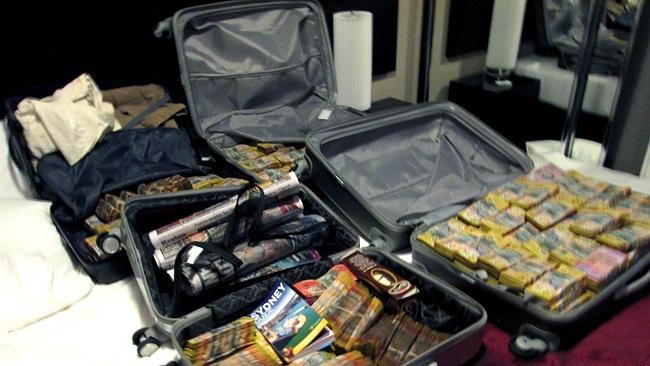
اعلنت الشرطة الاسترالية تفكيك شبكة واسعة لتبييض الاموال لها امتدادات في حوالى 20 بلدا ويعود جزء من اموالها لمصلحة “حزب الله”.
كذلك صادرت الشرطة كميات من المخدرات واصولا بقيمة 580 مليون دولار استرالي (510 ملايين دولار)، بينها 26 مليون دولار استرالي نقدا، وذلك خلال عملية استمرت عاما وحملت اسم “ايليغو”، وفق ما افادت اللجنة الاسترالية لمكافحة الجريمة.
واضافت اللجنة ان العملية كانت تهدف الى مكافحة عمليات تبييض اموال مصدرها انشطة غير شرعية لعصابات ومهربين.
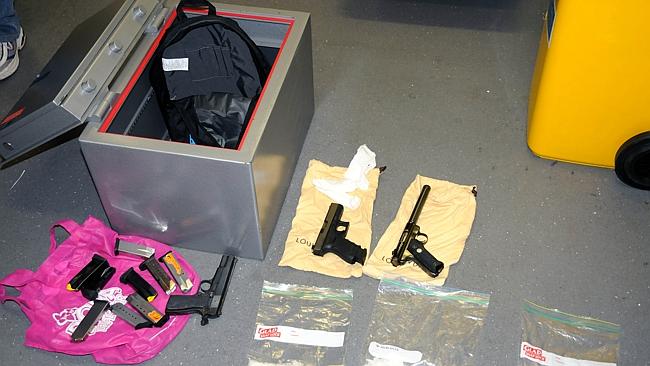
ومن بين اهداف العملية خصوصا 18عصابة منظمة و128 شخصا في اكثر من 20 بلدا. وفي النهاية، تم اعتقال 105 اشخاص واغلاق ثلاثة مختبرات لمادة الميثافيتامين التي قد تسبب الادمان، اضافة الى مصنع غير شرعي للقنب الهندي في سيدني.
وقال وزير العدل الاسترالي مايكل كينان ان فرق الشرطة ركزت جهودها على انشطة تبييض اموال وراقبت انشطة اجرامية عدة ادت الى هذه النتائج الجيدة جدا.
واضاف: “وضع اليد على اكثر من 550 مليون دولار (استرالي) من المخدرات والاموال النقدية يمثل ضربة قوية لاقتصاد الجريمة”.
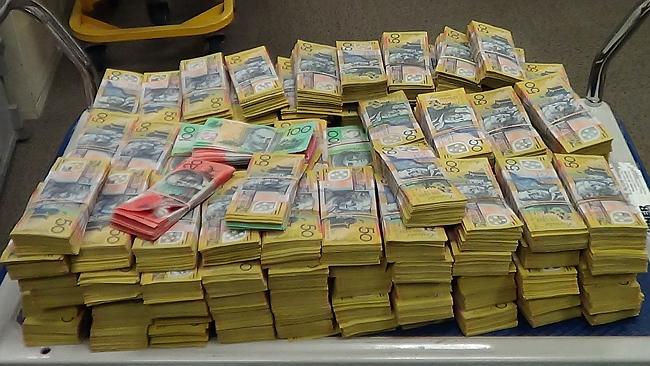
وبحسب وسائل الاعلام التابعة لمجموعة فيرفاكس، فإن افراد هذه العصابات اعتمدوا على العمليات التي اجراها اجانب مقيمون في استراليا وحصلوا على الاموال المرسلة من عائلاتهم في الخارج لاستبدالها باموال “وسخة” تدرها انشطة اجرامية.
واحد هذه المكاتب له حضور كبير في اسيا والشرق الاوسط ويحول جزءا من الاموال المبيضة لحساب “حزب الله” وفق فيرفاكس.
إشارة الى أن السلطات الاسترالية تحظر اي انشطة لـ”حزب الله” على اراضيها.
وقد نشرت وسائل اعلام استرالية وعالمية مختلفة هذا الخبر عبر مواقعها.
Channel News Asia: Australian police crack global money-laundering ring
Australian police revealed Thursday they had cracked a major global money-laundering ring with operatives in more than 20 countries and funds syphoned off to groups reported to include Hezbollah.
The Australian Crime Commission said more than A$580 million (US$512 million) of drugs and assets had been seized, including A$26 million in cash, in a year-long sting codenamed Eligo targeting the offshore laundering of funds generated by outlaw motorcycle gangs, people-smugglers and others.
According to the ACC, the operation had disrupted 18 serious and organised crime groups and singled out 128 individuals of interest in more than 20 countries, tapping information from agencies including the United States Drug Enforcement Administration.
Eligo saw 105 people arrested on 190 separate charges and resulted in the closure of three major clandestine methamphetamine labs and Australia’s largest-ever urban hydroponic cannabis hothouse in Sydney last November.
“The task force focused on high-threat money laundering activities and, as a result, revealed a range of different crime types which has led to these extraordinary outcomes,” said Australia’s Justice Minister Michael Keenan.
“Seizing more than $550 million worth of drugs and cash is a significant blow to the criminal economy,” he added.
Legitimate international cash wiring services were a major focus of the operation, with the government’s anti-laundering agency AUSTRAC saying they had been identified as at “high risk of being exploited by serious and organised crime groups”.
According to a Fairfax media expose on the operation, criminals targeted foreign nationals and students in Australia awaiting remittances from overseas, hijacking the transaction by depositing dirty money to the payee and then taking the cash wired from offshore.
Fairfax said at least one of the exchange houses used in the Middle East and Asia delivered a cut from every dollar it laundered to Lebanon’s powerful Shiite movement and Syria ally Hezbollah, which is banned as a terrorist organisation in Australia.
“It was just never-ending,” said ACC acting chief Col Blanch. “We were regularly finding bags of $500,000 and $400,000.”
Organised crime is estimated to cost Australia A$10-15 billion per year by the ACC, with drugs, money-laundering, fraud, firearms and high-tech cyber offences the major issues.
Profits from transnational organised crime were estimated at US$870 billion in 2009 — the latest available data — according to the ACC’s 2013 report into the sector. That represented about 1.5 per cent of global GDP at the time.
Bangkok post: Australian police crack global money-laundering racket
Australian police revealed Thursday they had cracked a major global money-laundering ring with operatives in more than 20 countries and funds syphoned off to groups reported to include Hezbollah.
The Australian Crime Commission said more than Aus$580 million (US$512 million) of drugs and assets had been seized, including Aus$26 million in cash, in a year-long sting codenamed Eligo targeting the offshore laundering of funds generated by outlaw motorcycle gangs, people-smugglers and others.
According to the ACC, the operation had disrupted 18 serious and organised crime groups and singled out 128 individuals of interest in more than 20 countries, tapping information from agencies including the United States Drug Enforcement Administration.
Eligo saw 105 people arrested on 190 separate charges and resulted in the closure of three major clandestine methamphetamine labs and Australia’s largest-ever urban hydroponic cannabis hothouse in Sydney last November.
“The task force focused on high-threat money laundering activities and, as a result, revealed a range of different crime types which has led to these extraordinary outcomes,” said Australia’s Justice Minister Michael Keenan.
“Seizing more than $550 million worth of drugs and cash is a significant blow to the criminal economy,” he added.
Legitimate international cash wiring services were a major focus of the operation, with the government’s anti-laundering agency AUSTRAC saying they had been identified as at “high risk of being exploited by serious and organised crime groups”.
According to a Fairfax media expose on the operation, criminals targeted foreign nationals and students in Australia awaiting remittances from overseas, hijacking the transaction by depositing dirty money to the payee and then taking the cash wired from offshore.
Fairfax said at least one of the exchange houses used in the Middle East and Asia delivered a cut from every dollar it laundered to Lebanon’s powerful Shiite movement and Syria ally Hezbollah, which is banned as a terrorist organisation in Australia.
“It was just never-ending,” said ACC acting chief Col Blanch. “We were regularly finding bags of $500,000 and $400,000.”
Organised crime is estimated to cost Australia Aus$10-15 billion per year by the ACC, with drugs, money-laundering, fraud, firearms and high-tech cyber offences the major issues.
Profits from transnational organised crime were estimated at US$870 billion in 2009 — the latest available data — according to the ACC’s 2013 report into the sector. That represented about 1.5 percent of global GDP at the time.
Business Insider Australia: Australian Drug Money Is Going To Terrorists: Report
Millions of dollars spent by Australians on illegal drugs are being sent to terrorists organisations through a money-laundering program, according to a Fairfax Media report.
Fairfax says 40 separate money-laundering operations have been uncovered across Australia by a task force called Project Eligo.
According to the report at least one of the exchange houses discovered sends a portion of ever dollar cleared to Lebanese group Hezbollah, whose military wing is listed as terrorist organisation by Australian authorities.
So far, according to the report, the operation has seized $26 million in dirty cash, and frozen $30 million of houses and other assets funded by drug money. It has also intercepted drug shipments totalling more than $530 million dollars.
The Age: Terrorists taking cut of millions in drug money
Terrorist groups are profiting as part of a money-laundering operation involving the hundreds of millions of dollars Australians spend on illegal drugs.
The revelations come as Australia’s biggest money-laundering probe, Project Eligo, has identified hundreds of unwitting Australian residents being duped into helping launder the drug money overseas, including funds generated by outlaw motorcycle groups and people-smuggling operations.
The money-laundering investigation has uncovered 40 separate money-laundering operations across Australia that are involved in moving hundreds of millions of dollars in drug money offshore.
The operation has so far seized $26 million in dirty cash, restrained $30 million of houses and other assets funded by drug money and intercepted drug shipments totalling more than $530 million dollars.
It’s understood that dozens of ”exchange houses” or money-laundering centres in the Middle East and Asia are then used to wash and distribute the money to overseas crime bosses.
It is believed at least one of the exchange houses used in the Australian operation delivers a cut from every dollar it launders to Lebanese militant group Hezbollah, whose military wing has been proscribed in Australia as a terrorist organisation.
Last year, the US government identified two Lebanese exchange houses, Kassem Rmeiti and Halawi Exchange, as drug money cleaners financing Hezbollah.
Taskforce Eligo has for at least 12 months been monitoring the businesses behind the movement of drug money from Australia. The process has led to the identification of almost 130 serious organised-crime figures previously unknown to law-enforcement agencies.
The revelations about the taskforce come with the federal government planning to revamp the nation’s asset confiscation and unexplained wealth regime. Most state governments and police forces are failing to back a push from federal agencies to fully utilise seizure powers.
One senior police source said that while Australia was good at tracking and freezing drug money heading overseas, it struggled to do the same thing to proceeds of crime locally.
Acting Australian Crime Commission operations manager Col Blanch said the taskforce investigation had tracked ”people-smuggling money … and bikie money”. Most of the funds moved involve the proceeds of drug trafficking.
A major impediment to the local struggle against organised crime has also been significant cuts made over the past three years to the ACC budget, forcing it to rely on the resources of other agencies.
Mr Blanch said that due to the scale of the operation, his agency had to call for the help of state and federal police and the US Drug Enforcement Administration.
”The amount of money and targets overwhelmed us. So all the agencies had to come working together.
”We saw this network of people whose job was to deliver money to banks,” Mr Blanch said. ”It was just never ending. We were regularly finding bags of $500,000 and $400,000.”
In one case, the ACC tracked a Mexican man working for a South American syndicate travelling to a property at Diggers Rest in rural Victoria. There, Vietnamese drug distributors were to give the Mexican a large amount of cash to be laundered offshore.
”People are paying ridiculous prices for drugs. The South Americans are obviously realising the potential for large profits,” Mr Blanch said.
One of the ways drug money can be laundered offshore involves crime figures targeting Australian residents – mostly foreign nationals and students – who are expecting a foreign bank, remittance service or business overseas to send money into their local account. Instead of this occurring, the crime figures deposit Australian drug money into the bank accounts of the unsuspecting victims and request money from the the bank or business overseas.
The scheme usually needs trust-based informal banking, remittance and exchange house services – commonly found in Vietnam, China and the Middle East – to be infiltrated by money-laundering networks.
Mr Blanch said that people in Australia needed to be aware their bank accounts could be exploited in such a fashion.
”We are trying to educate these innocent people. If we have new arrivals in the country, we want to educate them. If they are moving their money this way you risk being exploited by serious organised criminals.”
Another scheme involves the identification cards of foreign students being copied and used to set up local bank accounts.
”We have found the students have been remitting large amounts of money when they are not even in Australia.”
The Sunday Morning Herald: Terror groups taking cut as drug money is laundered
Terrorist groups are profiting as part of a money-laundering operation involving hundreds of millions of dollars Australians are spending on illegal drugs.
The revelations come as Australia’s biggest money-laundering investigation, Project Eligo, has identified hundreds of unwitting Australian residents being duped into helping to launder the drug money overseas – including funds generated by outlaw motorcycle gangs and people-smuggling operations.
It is believed at least one of the ”exchange houses” used in the Australian laundering operation delivers a cut from every dollar it launders to Lebanese militant group Hezbollah, whose military wing has been proscribed in Australia as a terrorist group.
The investigation has uncovered 40 separate money-laundering operations across Australia, moving hundreds of millions of dollars in drug money offshore, and identified almost 130 serious organised crime figures previously unknown to law-enforcement agencies.
One of the ways drug money can be laundered offshore involves crime figures targeting Australian residents – mostly foreign nationals and students – who are expecting a foreign bank, remittance service or business overseas to send money into their local account.
Instead of this occurring , the crime figures deposit Australian drug money into the bank accounts of the unsuspecting victims and request money from the bank or business overseas.
“We are trying to educate these innocent people,” said the Australian Crime Commission’s acting operations manager, Col Blanch.
”If we have new arrivals in the country, we want to educate them. If they are moving their money this way, they risk being exploited by serious organised criminals.”
The operation has seized $26 million in dirty cash, restrained $30 million worth of houses and other assets funded by drug money and intercepted drug shipments totalling more than $530 million.
It is understood dozens of ”exchange houses” or money-laundering centres in the Middle East and Asia are used to wash and distribute the money to overseas crime bosses.
The US government last year identified two Lebanese exchange houses, Kassem Rmeiti and Halawi Exchange, as drug money-launderers financing Hezbollah.
The revelations about the taskforce come as the federal government plans to revamp the nation’s asset confiscation and unexplained wealth regime. Most state governments and police forces are failing to back a push from federal agencies to fully use the seizure powers.
One senior police source said Australia was good at tracking and freezing drug money heading overseas, but it struggled to do the same with the proceeds of crime locally.
Mr Blanch said the taskforce investigation had tracked down “people-smuggling money … and bikie money”. Most of the funds moved involve the proceeds of drug-trafficking.
Mr Blanch said that due to the scale of the massive criminal operation, his agency had to call for the help of state and federal police and the US Drug Enforcement Administration.
“It was just never-ending,” Mr Blanch said. ”We were regularly finding bags of $500,000 and $400,000.”
Ashraf el nes
تبييض أموال ، تجارة مخدرات ، سرقات ، إرهاب ، اغتيالات،قتل رهائن
،عصابات. وأخر شيء يقولون نحن حزب الله ،( حاشاك ربي) من ذكر هولاء المجرمون